This page uses javascript to help render elements, if you have problems please enable javascript.
 
You are now inside the main content area


left col

Annual Report 24-25

right col
 
left col

Machine Learning for Disaster and Health Response

Faculty-Student Researchers Use Machine Learning Models to Manage Public Disasters and Health Emergencies

right col
 
left col

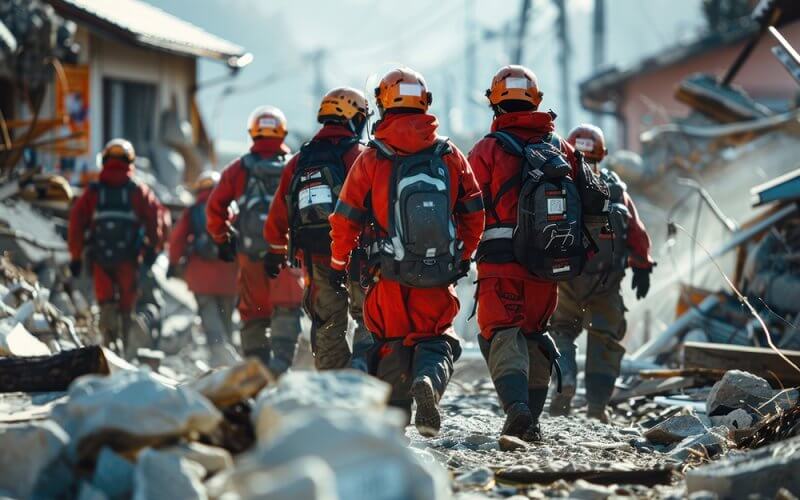
Emergency Response Teams

right col
 
left col

Graduate student Asad Abdul is learning how to use machine learning models to manage life-changing public disasters and health emergencies — from pandemics to wildfires to reduce losses and save lives.

Under the guidance of Sampson Akwafuo, Cal State Fullerton assistant professor of computer science, Abdul is working on a grant project to develop advanced machine learning algorithms to ensure they are practical and impactful for emergency response systems. 

The researchers said recent wildfires in Los Angeles County underscore the importance and urgency of the project.

“The fire spread rapidly, forcing first responders to make critical, split-second decisions about resource allocation,” said Abdul, a computer science major. “The system we’re developing can provide real-time data to emergency teams, enabling them to make decisions more effectively.”

One key aspect of the research involves creating a novel algorithm that uses data from various sources such as population, environmental, geospatial and resource availability. The algorithm can help emergency teams to respond faster, reduce casualties, and better support communities during disasters.

Funded by a $172,000 grant from the National Science Foundation, the project is a collaboration between researchers in computer science, public health and geography. The project aligns with Akwafuo’s research interests to develop computational models for predicting outbreaks of specific diseases and optimization of emergency response logistics for disasters. 

The researchers explained that the project’s potential goes beyond faster response times. By using data to predict disaster scenarios and allocate resources ahead of time, responders can be better prepared for volatile disasters.

right col
 
left col

“Our work will substantially benefit public health emergency and disaster researchers. It advances theoretical knowledge while finding solutions for real-life problems,” Akwafuo said.

right col
 
left col

Read the full story

right col
 
left col
right col