This page uses javascript to help render elements, if you have problems please enable javascript.
 
You are now inside the main content area


left col

Admissions & Entrance Auditions


right col
 
left col

Admissions

right col
 
left col

Applying to CSUF is the first step. Admission to the university does not guarantee admission to the School of Music. Applicants must also successfully complete the School of Music entrance audition. All students applying for admission as an undergraduate music major, regardless of whether they want to specialize in performance, composition, music education, music history, etc., are required to perform a vocal or instrumental audition.

right col
 
 
left col

University Admissions

Transcripts and TOEFL

Have an official transcript from each university, college, and/or community college you have attended sent directly to: 

CSU Fullerton
Admissions and Records
P.O. Box 6900
Fullerton, CA 92834-6900 

If your native language is not English and you have not completed a bachelor’s degree at an English-speaking institution, also have your TOEFL score of 550/80 or higher for the MM/MA or 500/61 or higher for the Artist Diploma sent to the address above. Note that foreign language transcripts must be accompanied by certified English translations. 

You cannot be admitted to CSUF without these documents. Sending them by February 1 (to begin study in fall) will expedite the admissions process and I-20 preparation. 

Please note that GRE scores are not needed and that CSUF alumni do not need to send CSUF transcripts.

Criteria for Admission

    1. A baccalaureate music degree from a domestic accredited college, university, or conservatory, or equivalent if foreign student (equivalency to be determined by Admissions and Records).
    2. A minimum 2.5 G.P.A. in the last 60 units attempted.
    3. For those applicants who hold no degrees from an English-language based institution, a minimum score of 500 on the paper-based TOEFL exam or 61 on the Internet TOEFL (NOTE: 550 paper / 80 Internet TOEFL is required for students choosing to enroll in 500-level graduate seminars for elective units).
    4. A high level of musical performance ability as assessed through a live audition (please see audition requirements listed under areas of concentration) held before the Artist Diploma Auditioning Committee which would be comprised of area coordinators and other appropriate music faculty (Students living at least 500 miles away for whom travel to CSUF would be costly, may submit a DVD or an online link to YouTube, Dropbox, personal website, etc., as a preliminary assessment of their performance; students successfully passing this preliminary assessment of their performance must still perform a live audition after they arrive). It is expected that an Artist Diploma candidate would pass a higher standard of performance in their audition than that of an incoming master’s student applying to the Master of Music Program.

Other Links

Cal State Fullerton’s School of Music offers, at a surprisingly reasonable cost:

  • Top-ranked performance faculty who provide individual instruction to every music major.

  • A rigorous academic program taught by highly respected and accessible faculty, who give personal attention to every student.

  • Outstanding programs in choral and instrumental music education, with near 100% post-graduation placement rates.

  • Performance opportunities in the beautiful acoustics of Meng Hall, our nationally respected 800-seat concert hall.
  • Hundreds of successful alumni, ranging from international opera stars Deborah Voigt, Rodney Gilfrey and Charles Castronovo, to teachers at all levels, from elementary school to some of our nation’s top universities.

  • Regular master classes with world-renowned musicians and teachers.

  • Ensembles that tour California, the United States and abroad at reduced or no cost to you.
right col
 
left col

Entrance Auditions

right col
 
 
left col

Entrance Auditions

To begin your application process:

  • Apply to CSUF through Cal State Apply. 
         - OR -
    If you currently attend CSUF, and please contact the Audition Coordinator to initiate your application.
  • Your application has been processed by the School of Music. 
    •  It may take up to two weeks for the School of Music to receive your Cal State Apply application.  
    •  Once processed, you will start receiving emails from the School of Music.

The Prescreen Submission Link Will Be Emailed To You (Once The Following Criteria Are Met)

  • You have submitted your Instrument Request Form
    •  Once you begin receiving emails from the School of Music, you will be asked to submit an Instrument Request Form so we can direct you to the appropriate area.
    • Please Note: Not all areas require prescreening.

The Audition Sign-Up Link Will Be Emailed To You (Once The Following Criteria Are Met)

  • You have submitted your Instrument Request Form
         - OR -
    Prescreening requirements have been submitted and evaluated.
    • Prescreening submission instructions will be emailed to applicants in areas requiring prescreening upon meeting the two criteria above.
    • Prescreening results will be released beginning mid-December.

Spring Auditions

October 3, 2026

Woodwinds: Sign up for a date and time here.
Piano: Contact Area Coordinator.
Voice: Sign up for a date and time here.
Strings: Contact Area Coordinator.
Classical Guitar: Contact Area Coordinator.
Jazz: Video submission.
Percussion: Video submission. For more information, please look here.
Brass: Video submission. For more information, please look here.

Fall Auditions

January 30 - 31 & February 6-7, 2027

Graduate students who would like full consideration for scholarships must apply by
January 1, 2027

Online registration begins at the end of November

  • For audition dates Jan. 30 and 31, registration ends January 28, 2027 at 5 PM
  • For audition dates Feb. 6 and 7, registration ends February 4, 2027 at  5 PM

Woodwinds: Jan. 30 and 31
Piano: more information coming soon
Voice: Jan. 30 and 31, Feb. 6 and 7
Strings: Feb. 6 and 7
Classical Guitar: more information coming soon
Jazz: Feb. 6 and 7
Percussion: Jan. 30 and 31, Feb. 6 
Brass: Feb. 6 and 7

right col
 
left col

Woodwinds

Suggested Audition Repertoire List


Contacts        
Woodwinds Area Coordinator: Dr. Michael Yoshimi
Graduate Program Advisor:  Dr. John Koegel

right col
 
 
left col

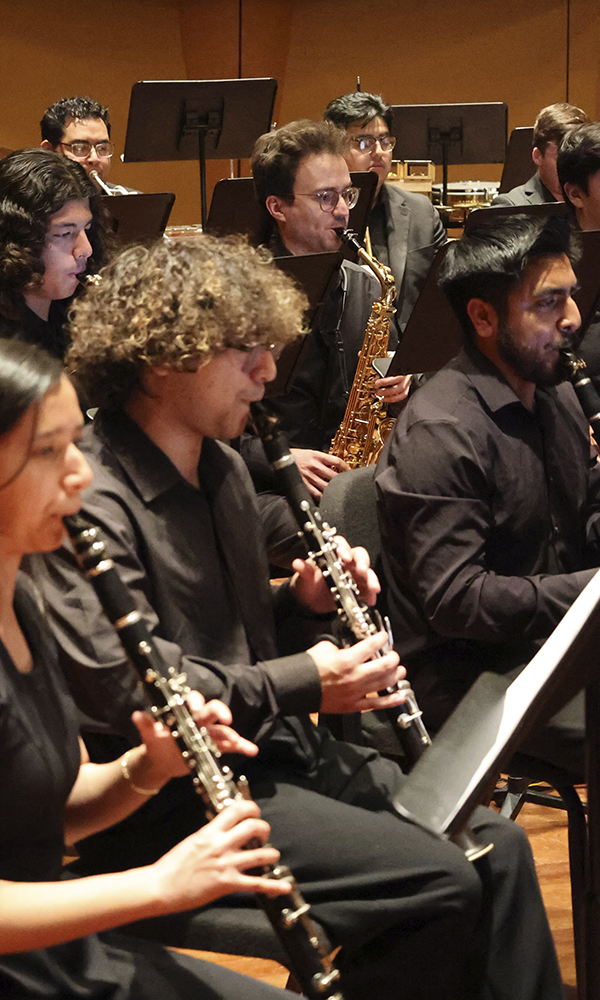
Wind instruments performing.

About the program

Develop your artistry and teaching skills, expand your versatility, and prepare for a meaningful career in Cal State Fullerton’s Woodwind Area.

The Woodwind Area offers comprehensive study in flute, oboe, clarinet, bassoon, and saxophone. Through individual lessons, studio classes, chamber music, and master classes with dedicated artist-faculty, students build a strong technical foundation and develop an individual musical voice.

Performance opportunities include the Symphony Orchestra, Wind Symphony, Symphonic Winds, University Band, jazz ensembles, New Music Ensemble, chamber groups, and mariachi. Students encounter varied repertoire and musical traditions while developing confidence, independence, and collaborative skills. This preparation has helped graduates enter respected graduate programs, establish themselves in Southern California’s professional music community, and succeed in professional auditions.

Music education is a distinctive strength of the School of Music, with a nearly 100% job placement rate for students completing the music teaching credential program. Woodwind students learn practical approaches to teaching tone production, technique, and repertoire. Performance majors may also complete music education degree requirements alongside their performance studies, broadening their professional options.

The Woodwind Area welcomes students with different backgrounds, experiences, and goals. Faculty guidance connects each student’s development as a performer with opportunities in teaching, professional music-making, and further study.


Flute

Prescreening Requirements (Undergraduate & Graduate)

All flute applicants must record one etude/piece out of the repertoire required for the live audition. The selection does not need to be longer than 5 minutes. Piano accompaniment is not required but accepted.

  • This could be a complete standard etude, or in the case of a movement of a major concerto, the exposition of that movement will suffice. A movement of a sonata or a solo flute work is also acceptable.

Note: If you are recording prescreening videos for another school and a piece you recorded is longer than 5 minutes, it is acceptable to submit that video without having to cut it down or redo a shorter section for our prescreening.

Please see the “Detailed Prescreening Video Procedures and Instructions” link under the Woodwinds header (above) for the detailed instructions for recording and submitting your prescreening video.


Live Audition Requirements

Undergraduate Flute Degrees: 
BA - Bachelor of Arts in Music Education (Instrumental Emphasis w/Flute)
BA - Bachelor of Arts in Liberal Arts w/Flute
BM - Bachelor of Music in Flute Performance

Please prepare the works from all of the categories below. No orchestral or band excerpts will be accepted. Not including the audition rhythms, you should have three different musical selections prepared.

  • Two contrasting (lyrical vs. technical) works or movements from the standard flute repertory. The two works should also be from different stylistic periods (i.e. Baroque vs. Classical vs. Romantic period)

  • One etude from the standard flute etude repertory.

  • Clap the beat while singing the CSUF Woodwind audition rhythms on a neutral syllable. Please see the link under the “Woodwinds” header (above).

  • Sightreading and/or any of the major scales plus a full range chromatic scale may be asked at the audition.

Piano accompaniment is not required but accepted.


Please see the “Suggested Audition Repertoire List” link under the “Woodwinds” header for a comprehensive but not complete list of possible audition repertory for the flute if you are not sure of what repertoire to choose.


Graduate Flute Degrees:
MM - Master of Music in Flute Performance
AD - Artist Diploma Professional Certificate in Flute Performance

Graduate flute applicants should prepare:

  • Three contrasting works from the standard flute repertory
  • Two contrasting orchestral excerpts.

At least one piece should be a movement from a major concerto/standard repertory, and at least two stylistic periods should be represented (i.e. Baroque, Classical, Romantic, Contemporary).

Piano accompaniment is not required but accepted.

Note: MM and AD applicants - the submission of your recommendations from ALL of your recommenders must be completed to the Cal State Apply application in order for the School of Music to receive your application and for you to receive prescreening submission links and audition information in a timely manner.


Questions? 

For Undergraduate and Artist Diploma applicants, and other woodwind area related questions, contact Dr. Yoshimi.

For Graduate (MM) applicants and Master’s program related questions, contact Dr. Koegel.

 

Clarinet

Prescreening Requirements (Undergraduate & Graduate)

All clarinet applicants must record one etude/piece out of the repertoire required for the live audition. The selection does not need to be longer than 5 minutes. Piano accompaniment is not required but accepted.

  • This could be a complete Rose etude, or in the case of a movement of a major concerto, the exposition of that movement will suffice. A movement of a sonata or a solo clarinet work is also acceptable.

Note: If you are recording prescreening videos for another school and a piece you recorded is longer than 5 minutes, it is acceptable to submit that video without having to cut it down or redo a shorter section for our prescreening.

Please see the “Detailed Prescreening Video Procedures and Instructions” link under the Woodwinds header (above) for the detailed instructions for recording and submitting your prescreening video.


Live Audition Requirements

Undergraduate Clarinet Degrees: 
BA - Bachelor of Arts in Music Education (Instrumental Emphasis w/Clarinet)
BA - Bachelor of Arts in Liberal Arts w/Clarinet
BM - Bachelor of Music in Clarinet Performance

Please prepare the works from all of the categories below. No orchestral or band excerpts will be accepted. Not including the audition rhythms, you should have four different musical selections prepared.

  • Two contrasting (lyrical vs. technical) etudes from either the Rose 32 Etudes or the Rose 40 Etudes. (Does not have to be from only the 32 or only the 40, could be one from each but contrasting)

  • The Exposition of a standard classical period concerto. (See suggested audition repertoire list)

  • One work or movement of your choice from the standard clarinet repertory outside of the classical period.

  • Clap the beat while singing the CSUF Woodwind Audition rhythms on a neutral syllable. Please see the link under the “Woodwinds” header (above).

Piano accompaniment is not required but accepted.

Please see the “Suggested Audition Repertoire List” link under the “Woodwinds” header for a comprehensive but not complete list of possible audition repertory for the clarinet if you are not sure of what repertoire to choose.


Graduate Clarinet Degrees:
MM - Master of Music in Clarinet Performance
AD - Artist Diploma Professional Certificate in Clarinet Performance

Graduate clarinet applicants should prepare:

  • Three contrasting works from the standard clarinet repertory
  • Two contrasting orchestral excerpts.

At least one piece should be a movement from a major concerto/standard repertory, and at least two stylistic periods should be represented (i.e. Baroque, Classical, Romantic, Contemporary).


Piano accompaniment is not required but accepted.

Note: MM and AD applicants - the submission of your recommendations from ALL of your recommenders must be completed to the Cal State Apply application in order for the School of Music to receive your application and for you to receive prescreening submission links and audition information in a timely manner.


Questions? 

For Undergraduate and Artist Diploma applicants, and other woodwind area related questions, contact Dr. Yoshimi.

For Graduate (MM) applicants and Master’s program related questions, contact Dr. Koegel.

 

Oboe

Prescreening Requirements (Undergraduate & Graduate)

All oboe applicants must record one etude/piece out of the repertoire required for the live audition. The selection does not need to be longer than 5 minutes. Piano accompaniment is not required but accepted.

  • This could be a complete standard etude, or in the case of a movement of a major concerto, the exposition of that movement will suffice. A movement of a sonata or a solo oboe work is also acceptable. 

Note: If you are recording prescreening videos for another school and a piece you recorded is longer than 5 minutes, it is acceptable to submit that video without having to cut it down or redo a shorter section for our prescreening.

Please see the “Detailed Prescreening Video Procedures and Instructions” link under the Woodwinds header (above) for the detailed instructions for recording and submitting your prescreening video.


Live Audition Requirements

Undergraduate Oboe Degrees: 
BA - Bachelor of Arts in Music Education (Instrumental Emphasis w/Oboe)
BA - Bachelor of Arts in Liberal Arts w/Oboe
BM - Bachelor of Music in Oboe Performance

Please prepare the works from all of the categories below. No orchestral or band excerpts will be accepted. Not including the audition rhythms, you should have four different musical selections prepared. The works should be of contrasting style (i.e. lyrical vs. technical, different stylistic periods).

  • Two contrasting (lyrical vs. technical) etudes from either the Barret 40 Progressive Melodies (from No. 18 to 40), or Barret Grand Studies, or the Ferling 48 Etudes.

  • The Exposition of a standard concerto from the Baroque or Classical period. (See suggested audition repertoire list)

  • One complete work or movement of a standard sonata or non-Baroque/Classical concerto. It can also be from the unaccompanied solo oboe repertoire.

  • Clap the beat while singing the CSUF Woodwind Audition rhythms on a neutral syllable. Please see the link under the “Woodwinds” header (above).

  • Sightreading and/or any major or harmonic minor scale up to five flats and five sharps may be asked at the audition.

Piano accompaniment is not required but accepted.

Please see the “Suggested Audition Repertoire List” link under the “Woodwinds” header for a comprehensive but not complete list of possible audition repertory for the oboe if you are not sure of what repertoire to choose.


Graduate Oboe Degrees:
MM - Master of Music in Oboe Performance
AD - Artist Diploma Professional Certificate in Oboe Performance

Graduate oboe applicants should prepare:

  • Three contrasting works from the standard oboe repertory
  • Two contrasting orchestral excerpts.

At least one piece should be a movement from a major concerto/standard repertory, and at least two stylistic periods should be represented (i.e. Baroque, Classical, Romantic, Contemporary).


Piano accompaniment is not required but accepted.

Note: MM and AD applicants - the submission of your recommendations from ALL of your recommenders must be completed to the Cal State Apply application in order for the School of Music to receive your application and for you to receive prescreening submission links and audition information in a timely manner.


Questions? 

For Undergraduate and Artist Diploma applicants, and other woodwind area related questions, contact Dr. Yoshimi.

For Graduate (MM) applicants and Master’s program related questions, contact Dr. Koegel.
 

Bassoon

Prescreening Requirements (Undergraduate & Graduate)

All bassoon applicants must record one etude/piece out of the repertoire required for the live audition. The selection does not need to be longer than 5 minutes. Piano accompaniment is not required but accepted.

  • This could be a complete standard etude, or in the case of a movement of a major concerto, the exposition of that movement will suffice. A movement of a sonata or a solo bassoon work is also acceptable.

Note: If you are recording prescreening videos for another school and a piece you recorded is longer than 5 minutes, it is acceptable to submit that video without having to cut it down or redo a shorter section for our prescreening.

Please see the “Detailed Prescreening Video Procedures and Instructions” link under the Woodwinds header (above) for the detailed instructions for recording and submitting your prescreening video.


Live Audition Requirements

Undergraduate Bassoon Degrees: 
BA - Bachelor of Arts in Music Education (Instrumental Emphasis w/Bassoon)
BA - Bachelor of Arts in Liberal Arts w/Bassoon
BM - Bachelor of Music in Bassoon Performance

Please prepare the works from all of the categories below. No orchestral or band excerpts will be accepted. Not including the audition rhythms, you should have three different musical selections prepared.

  • Two contrasting (lyrical vs. technical) works or movements from the standard bassoon repertory. The two works/movements should also be from different stylistic periods (i.e. Baroque vs. Classical vs. Romantic period)

  • One etude from the standard bassoon repertory.

  • Clap the beat while singing the CSUF Woodwind audition rhythms on a neutral syllable. Please see the link under the “Woodwinds” header (above).

  • Sightreading and/or any of the major scales may be asked at the audition.

Piano accompaniment is not required but accepted.

Please see the “Suggested Audition Repertoire List” link under the “Woodwinds” header for a comprehensive but not complete list of possible audition repertory for the bassoon if you are not sure of what repertoire to choose.


Graduate Bassoon Degrees:
MM - Master of Music in Bassoon Performance
AD - Artist Diploma Professional Certificate in Bassoon Performance

Graduate bassoon applicants should prepare:

  • Three contrasting works from the standard bassoon repertory
  • Two contrasting orchestral excerpts.

At least one piece should be a movement from a major concerto/standard repertory, and at least two stylistic periods should be represented (i.e. Baroque, Classical, Romantic, Contemporary). 


Piano accompaniment is not required but accepted.

Note: MM and AD applicants - the submission of your recommendations from ALL of your recommenders must be completed to the Cal State Apply application in order for the School of Music to receive your application and for you to receive prescreening submission links and audition information in a timely manner.


Questions? 

For Undergraduate and Artist Diploma applicants, and other woodwind area related questions, contact Dr. Yoshimi.

For Graduate (MM) applicants and Master’s program related questions, contact Dr. Koegel.
 

Classical Saxophone

Prescreening Requirements (Undergraduate & Graduate)

All saxophone applicants must record one piece out of the repertoire required for the live audition. The selection does not need to be longer than 5 minutes. Piano accompaniment is not required but accepted

  • In the case of a movement of a major concerto, the exposition of that movement will suffice. A movement of a sonata or a solo classical saxophone work is also acceptable.

Note: If you are recording prescreening videos for another school and a piece you recorded is longer than 5 minutes, it is acceptable to submit that video without having to cut it down or redo a shorter section for our prescreening. 

Please see the “Detailed Prescreening Video Procedures and Instructions” link under the Woodwinds header (above) for the detailed instructions for recording and submitting your prescreening video.


Live Audition Requirements

Undergraduate Classical Saxophone Degrees: 
BA - Bachelor of Arts in Music Education (Instrumental Emphasis w/Classical Saxophone)
BA - Bachelor of Arts in Liberal Arts w/Classical Saxophone
BM - Bachelor of Music in Classical Saxophone Performance

Please prepare the following requirements from the categories below. No orchestral or band excerpts will be accepted. The two repertoire selections should be of contrasting style (i.e. lyrical vs. technical, different stylistic periods).

  • Two contrasting (lyrical vs. technical) works or movements from the standard classical saxophone solo repertory. The two works/movements should also be from different stylistic periods within the classical saxophone repertory.

    • Note: Etudes are NOT allowed as repertoire selections in this audition.

  • Clap the beat while singing the CSUF Woodwind audition rhythms on a neutral syllable. Please see the link under the “Woodwinds” header (above).

  • Sightreading in the form of standard scale study/patterns or etudes may be asked at the audition.

Piano accompaniment is not required but accepted.

Please see the “Suggested Audition Repertoire List” link under the “Woodwinds” header for a comprehensive but not complete list of possible audition repertory for classical saxophone if you are not sure of what repertoire to choose.


Graduate Classical Saxophone Degrees:
MM - Master of Music in Classical Saxophone Performance
AD - Artist Diploma Professional Certificate in Classical Saxophone Performance

Graduate classical saxophone applicants should prepare:

  • Three contrasting works from the standard classical saxophone repertory
  • Two contrasting orchestral excerpts.

At least one piece should be a movement from a major concerto/standard repertory, and at least two stylistic periods should be represented (i.e. Baroque, Classical, Romantic, Contemporary). 


Piano accompaniment is not required but accepted.

Note: MM and AD applicants - the submission of your recommendations from ALL of your recommenders must be completed to the Cal State Apply application in order for the School of Music to receive your application and for you to receive prescreening submission links and audition information in a timely manner.


Questions? 

For Undergraduate and Artist Diploma applicants, and other woodwind area related questions, contact Dr. Yoshimi.

For Graduate (MM) applicants and Master’s program related questions, contact Dr. Koegel.
 

right col
 
left col

Brass and Percussion

Contacts                
Brass Area Coordinator: Sycil Mathai
Percussion Area Coordinator: Kenneth Mcgrath
Graduate Program Advisor:   Dr. John Koegel

right col
 
 
left col

About the Program

The Brass and Percussion program at Cal State Fullerton offers an exciting and enriching variety of opportunities for a diverse education.

Students benefit from a low student to faculty ratio which allows for individualized mentorships throughout your degree. You will receive weekly studio classes, opportunities to work with internationally recognized guest artists and clinicians, and the ability to perform in multiple ensembles like wind band, orchestra, brass and percussion chamber ensembles, mariachi, and jazz ensemble. Our Music Education major is recognized as one of the strongest and boasts a virtual 100% job placement rate. Performance majors can simultaneously complete the performance and music education degree requirements. 

Trumpet

Repertoire Requirements

Undergraduate 

Please prepare the following for your audition:

    1. Two contrasting movements from the standard solo repertory for your instrument
           OR
      One movement from a concerto and a standard etude.

      Accompaniment is not required.
      •  Excerpts from school band or orchestra repertoire will not be accepted as audition material.
    2. ​Scales (not concert pitch) :  Ab major, c minor natural, and G major (one or two octaves are both acceptable).

Video auditions may be arranged on a need-to-need basis when an in-person audition is not possible. Prospective students interested in completing a video audition should contact the appropriate Area Coordinator directly to discuss their circumstances and available options.


Graduate

The student should video record three contrasting selections of their choice but representative of the major solo repertoire for their instrument (i.e., at least one piece should be a concerto or a sonata). Ideally, at least two style periods would be represented. Accompaniment is not required for this year's audition.  

Letters of Recommendation
Arrange to have letters of recommendation from three music professionals familiar with your preparation for graduate study sent to the School of Music graduate program adviser.

Video auditions may be arranged on a need-to-need basis when an in-person audition is not possible. Prospective students interested in completing a video audition should contact the appropriate Area Coordinator directly to discuss their circumstances and available options.

Artist Diploma

Three works of contrasting style

Video auditions may be arranged on a need-to-need basis when an in-person audition is not possible. Prospective students interested in completing a video audition should contact the appropriate Area Coordinator directly to discuss their circumstances and available options.

Horn

Repertoire Requirements

Undergraduate 

Please prepare the following for your audition:

    1. Two contrasting movements from the standard solo repertory for your instrument
           OR
      One movement from a concerto and a standard etude.

      Accompaniment is not required.
      •  Excerpts from school band or orchestra repertoire will not be accepted as audition material.
    2. ​Scales (not concert pitch) :  Ab major, c minor natural, and G major (one or two octaves are both acceptable).

Video auditions may be arranged on a need-to-need basis when an in-person audition is not possible. Prospective students interested in completing a video audition should contact the appropriate Area Coordinator directly to discuss their circumstances and available options.


Graduate

The student should video record three contrasting selections of their choice but representative of the major solo repertoire for their instrument (i.e., at least one piece should be a concerto or a sonata). Ideally, at least two style periods would be represented. Accompaniment is not required for this year's audition.  

Letters of Recommendation
Arrange to have letters of recommendation from three music professionals familiar with your preparation for graduate study sent to the School of Music graduate program adviser.

Video auditions may be arranged on a need-to-need basis when an in-person audition is not possible. Prospective students interested in completing a video audition should contact the appropriate Area Coordinator directly to discuss their circumstances and available options.


Artist Diploma

Three works of contrasting style

Video auditions may be arranged on a need-to-need basis when an in-person audition is not possible. Prospective students interested in completing a video audition should contact the appropriate Area Coordinator directly to discuss their circumstances and available options.

Trombone

Repertoire Requirements

Undergraduate

Please prepare the following for your audition:

    1. Two contrasting movements from the standard solo repertory for your instrument
           OR
      One movement from a concerto and a standard etude.

      Accompaniment is not required.
      •  Excerpts from school band or orchestra repertoire will not be accepted as audition material.
    2. ​Scales (not concert pitch) :  Ab major, c minor natural, and G major (one or two octaves are both acceptable).

Video auditions may be arranged on a need-to-need basis when an in-person audition is not possible. Prospective students interested in completing a video audition should contact the appropriate Area Coordinator directly to discuss their circumstances and available options.


Graduate

The student should video record three contrasting selections of their choice but representative of the major solo repertoire for their instrument (i.e., at least one piece should be a concerto or a sonata). Ideally, at least two style periods would be represented. Accompaniment is not required for this year's audition.  

Letters of Recommendation
Arrange to have letters of recommendation from three music professionals familiar with your preparation for graduate study sent to the School of Music graduate program adviser.

Video auditions may be arranged on a need-to-need basis when an in-person audition is not possible. Prospective students interested in completing a video audition should contact the appropriate Area Coordinator directly to discuss their circumstances and available options.


Artist Diploma

Three works of contrasting style

Video auditions may be arranged on a need-to-need basis when an in-person audition is not possible. Prospective students interested in completing a video audition should contact the appropriate Area Coordinator directly to discuss their circumstances and available options.

Euphonium

Repertoire Requirements

Undergraduate

Please prepare the following for your audition:

    1. Two contrasting movements from the standard solo repertory for your instrument
           OR
      One movement from a concerto and a standard etude.

      Accompaniment is not required.
      •  Excerpts from school band or orchestra repertoire will not be accepted as audition material.
    2. ​Scales (not concert pitch) :  Ab major, c minor natural, and G major (one or two octaves are both acceptable).

Video auditions may be arranged on a need-to-need basis when an in-person audition is not possible. Prospective students interested in completing a video audition should contact the appropriate Area Coordinator directly to discuss their circumstances and available options.


Graduate

The student should video record three contrasting selections of their choice but representative of the major solo repertoire for their instrument (i.e., at least one piece should be a concerto or a sonata). Ideally, at least two style periods would be represented. Accompaniment is not required for this year's audition.  

Letters of Recommendation
Arrange to have letters of recommendation from three music professionals familiar with your preparation for graduate study sent to the School of Music graduate program adviser.

Video auditions may be arranged on a need-to-need basis when an in-person audition is not possible. Prospective students interested in completing a video audition should contact the appropriate Area Coordinator directly to discuss their circumstances and available options.


Artist Diploma

Three works of contrasting style

Video auditions may be arranged on a need-to-need basis when an in-person audition is not possible. Prospective students interested in completing a video audition should contact the appropriate Area Coordinator directly to discuss their circumstances and available options.

Tuba

Repertoire Requirements

Undergraduate

Please prepare the following for your audition:

    1. Two contrasting movements from the standard solo repertory for your instrument
           OR
      One movement from a concerto and a standard etude.

      Accompaniment is not required.
      •  Excerpts from school band or orchestra repertoire will not be accepted as audition material.
    2. ​Scales (not concert pitch) :  Ab major, c minor natural, and G major (one or two octaves are both acceptable).

Video auditions may be arranged on a need-to-need basis when an in-person audition is not possible. Prospective students interested in completing a video audition should contact the appropriate Area Coordinator directly to discuss their circumstances and available options.


Graduate

The student should video record three contrasting selections of their choice but representative of the major solo repertoire for their instrument (i.e., at least one piece should be a concerto or a sonata). Ideally, at least two style periods would be represented. Accompaniment is not required for this year's audition.  

Letters of Recommendation
Arrange to have letters of recommendation from three music professionals familiar with your preparation for graduate study sent to the School of Music graduate program adviser.

Video auditions may be arranged on a need-to-need basis when an in-person audition is not possible. Prospective students interested in completing a video audition should contact the appropriate Area Coordinator directly to discuss their circumstances and available options.


Artist Diploma

Three works of contrasting style

Video auditions may be arranged on a need-to-need basis when an in-person audition is not possible. Prospective students interested in completing a video audition should contact the appropriate Area Coordinator directly to discuss their circumstances and available options.

Percussion

Repertoire Requirements

Undergraduate 

Please prepare the following for your audition:

Snare Drum : 

  • PETERS: Intermediate Snare Drum Studies-#32 complete -OR- DELECLUSE: 12 Etudes for Snare Drum-#1 beginning-measure 35
  • PRATT: 14 Modern Contest Solos-”Drum Corps on Parade” beginning-measure 32
  • Sightreading

Mallets : 

  • BACH: Partita No. 3 in E Major for Solo Violin-Gigue,1st section only, no repeat -OR- HANDEL: Sonata No. 3 in F Major for Violin-movement 2 “Allegro”, beginning-measure 21 only, no repeat and no piano accompaniment
  • 4-Mallet Marimba Solo of Choice
  • Sightreading

Timpani : Please note: candidates must tune from an A-440 tuning fork

  • PETERS: Fundamental Method for Timpani-Etude #44 complete -OR- PETERS: Fundamental Method for Timpani-Etude #45 complete
  • Demonstrate Singing Pitches and Basic Tuning


Graduate 

Graduate Percussion applicants please prepare:  

Snare Drum : 

  • Long Buzz Roll, 30 seconds crescendo-decrescendo pianissimo-fortissimo-pianissimo
  • DELECLUSE: 12 Solos for Snare Drum-Etude #6 complete
  • TOMPKINS: Nine French-American Rudimental Solos Vol. 1-Etude #4 complete
  • PROKOFIEV:  Lt. Kije Suite-movement 1, rehearsal 1-2
  • RIMSKY-KORSAKOV: Scheherazade-movement 4, rehearsal P-R and T-U

Mallets : 

  • BACH: Gigue, Partita No. 2 for Solo Violin, 1st section only, no repeat
  • 4-Mallet Marimba Solo of Choice
  • GERSHWIN: Porgy and Bess-opening (xylophone)
  • BERNSTEIN: Symphonic Dances from West Side Story-”Meeting Scene” measure 567-607 and “Cool Fugue” measure 620-633 (vibraphone)
  • Sightreading

Timpani : Please note: candidates must tune from an A-440 tuning fork

  • WOUD: The Timpani Challenge-Solo #17 complete
  • BEETHOVEN: Symphony No. 9-movement I coda
  • MARTIN: Concerto for 7 Wind Instruments, Timpani, Percussion, and String Orchestra-movement III, rehearsal 18-23
  • Demonstrate Singing Pitches and Basic Tuning

Letters of Recommendation
Arrange to have letters of recommendation from three music professionals familiar with your preparation for graduate study sent to the School of Music graduate program adviser.


Artist Diploma 

Prepare the requirements for Graduate Student Applicants as well as the following:

Tambourine : 

  • DVORAK: Carnival Overture-beginning-rehearsal C
  • STRAVINSKY: Petrushka (1947)-rehearsal 201-207

Cymbals: 

  • RACHMANINOFF: Piano Concerto No. 2-rehearsal 32-33
  • TCHAIKOVSKY: Symphony No. 4, movement 4 measure 272-end

Letters of Recommendation
Arrange to have letters of recommendation from three music professionals familiar with your preparation for graduate study sent to the School of Music graduate program adviser.

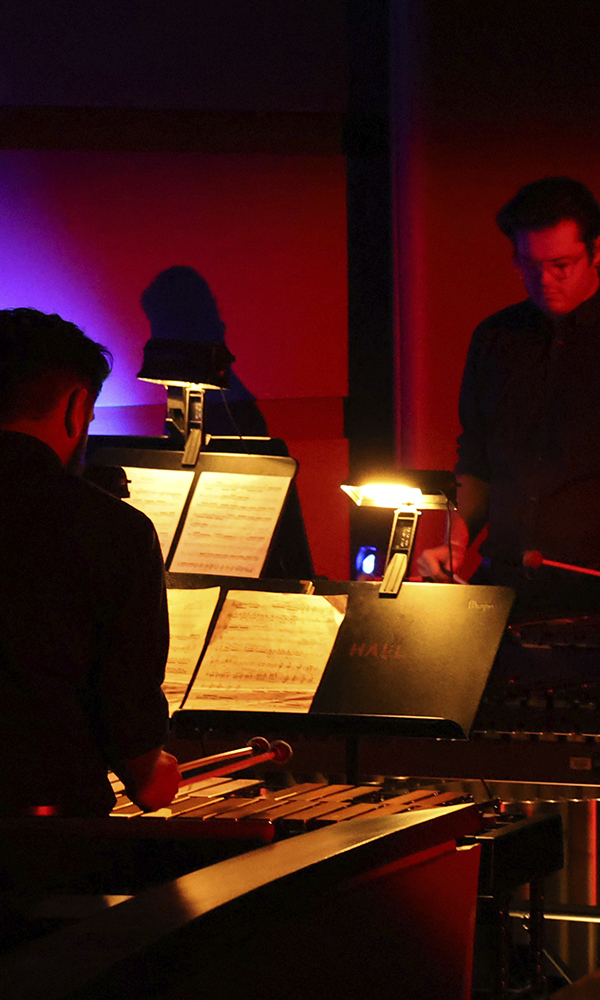
Percussionists performing.

right col
 
left col

Strings (includes Guitar)

Contacts    
Strings Area Coordinator: Dr. Ernest Salem
Guitar Advisor: Douglas Lora Las Casas 
Graduate Program Advisor: Dr. John Koegel

right col
 
 
left col

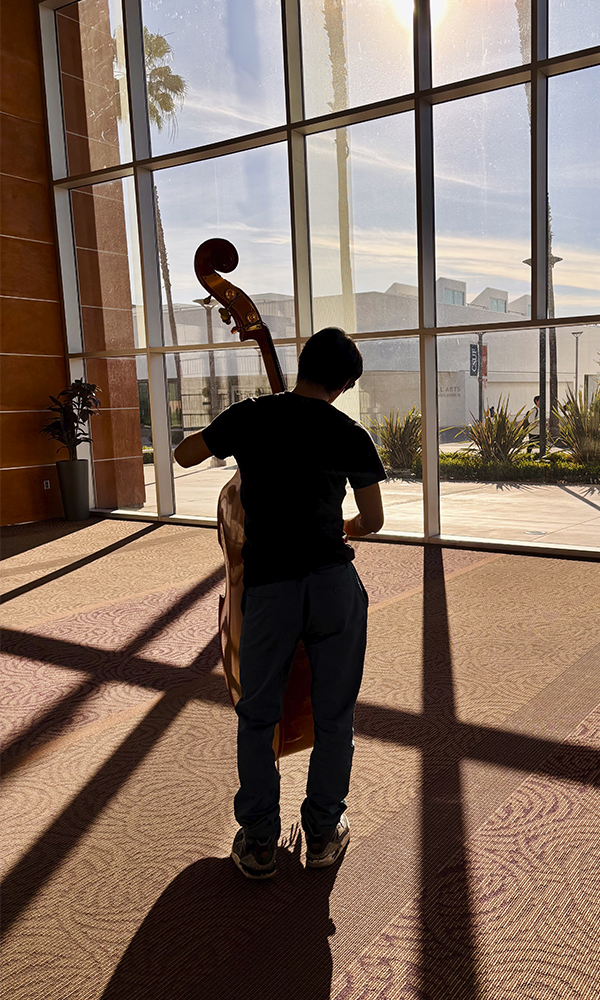
Bass player rehearsing in a building lobby.

About the Program

The String program at California State University, Fullerton offers a variety of opportunities for the developing string student at both the bachelor’s and master’s level.

Students receive a specialized yet comprehensive education while participating in numerous chamber ensembles and the University Orchestra at California State University, Fullerton. State-funded lessons are available as are a variety of scholarships. Graduates from the program are currently active in both educational and professional settings.

Master classes have been regularly offered by artists in the region and by internationally acclaimed performers. These have included Jorja Fleezanis, Akamei Takanama, Wainchi Wang, Glenn Dicterow, Ben Sung, and Tsuyoshi Tsutsumi. Sessions have also been held with members of the Pacific Symphony Orchestra and Los Angeles Philharmonic.

Violin

Undergraduate

Repertoire and Other Audition Information for the BM and BA in Music

Repertoire requirements 

1. Two contrasting pieces or movements from the standard repertory - this would include movements from, but not limited to, the following works:   

Violin - Bach E Major Concerto;  Haydn Concerto in C Major including cadenzas; Mozart Concertos 3, 4, or 5 including a cadenza;  Bruch Concerto No. 1 in G Minor;  Lalo Symphonie Espagnole;  Conus Concerto; Wieniawski Concerto No. 2;   Mendelssohn Concerto;  Saint Saens Concerto No. 3 in B minor:  Vieuxtemps Concertos 4 and 5.

2. One major and one minor scale of your choice:
Violin - Any key of your choice, three octaves, for the minor key please use the melodic form.

3. A standard etude:
Violin - An etude of your choice from Fiorillo (excluding 1 through 3), Kruetzer (excluding numbers 1 through 5), Rode.

Graduate

The student should be prepared to perform one standard etude and three contrasting pieces or movements of their choice, representative of the major solo repertoire, from different style periods.  Ideally, one piece should be a concerto or concerto movement, one work should be an unaccompanied work such as Bach, and one work should be a type of concert piece or sonata. Major and minor scales, double-stop scales and arpeggios may also be heard.

Letters of Recommendation
Arrange to have letters of recommendation from three music professionals familiar with your preparation for graduate study sent to the School of Music graduate program adviser.

Artist Diploma

Three contrasting selections from the following possibilities: a standard concerto, an unaccompanied work such as a Bach Sonata, Suite or Partita, a virtuoso short piece, a major sonata. One of the works must be complete (all movements prepared). Memorization is required. In addition, one standard etude, scales and arpeggios.

Viola

Undergraduate

  1. Two contrasting pieces or movements from the standard repertory
  2. One major and one minor scale of your choice
  3. A standard etude

Graduate

The student should be prepared to perform one standard etude and three contrasting pieces or movements of their choice, representative of the major solo repertoire, from different style periods.  Ideally, one piece should be a concerto or concerto movement, one work should be an unaccompanied work such as Bach, and one work should be a type of concert piece or sonata. Major and minor scales, double-stop scales and arpeggios may also be heard.

Letters of Recommendation
Arrange to have letters of recommendation from three music professionals familiar with your preparation for graduate study sent to the School of Music graduate program adviser.

Artist Diploma

Three contrasting selections from the following possibilities: a standard concerto, an unaccompanied work such as a Bach Sonata, Suite or Partita, a virtuoso short piece, a major sonata. One of the works must be complete (all movements prepared). Memorization is required. In addition, one standard etude, scales and arpeggios.

Cello

Undergraduate

Repertoire and Other Audition Information for the BM and BA in Music

Repertoire requirements 

1. Two contrasting pieces or movements from the standard repertory - this would include movements from, but not limited to, the following works:   Cello - Fast movement from a standard concerto written after 1750. 

2. One major and one minor scale of your choice:

  Cello - Any key of your choice in three octaves. For the minor key, please use the melodic form.


3. A standard etude:

  Cello - An etude of your choice from Schroeder, Grützmacher, or Popper

Graduate

The student should be prepared to perform one standard etude and three contrasting pieces or movements of their choice, representative of the major solo repertoire, from different style periods.  Ideally, one piece should be a concerto or concerto movement, one work should be an unaccompanied work such as Bach, and one work should be a type of concert piece or sonata. Major and minor scales, double-stop scales and arpeggios may also be heard.

Letters of Recommendation
Arrange to have letters of recommendation from three music professionals familiar with your preparation for graduate study sent to the School of Music graduate program adviser.

Artist Diploma

Three contrasting selections from the following possibilities: a standard concerto, an unaccompanied work such as a Bach Sonata or Suite, a virtuoso short piece, a major sonata. One of the works must be complete (all movements prepared) and from the Classical era. Memorization is required. In addition, one caprice by Piatti.

Double Bass

Undergraduate

  1. Two contrasting pieces or movements from the standard repertory
  2. One major and one minor scale of your choice
  3. A standard etude

Graduate

The student should be prepared to perform one standard etude and three contrasting pieces or movements of their choice, representative of the major solo repertoire, from different style periods.  Ideally, one piece should be a concerto or concerto movement, one work should be an unaccompanied work such as Bach, and one work should be a type of concert piece or sonata. Major and minor scales, double-stop scales and arpeggios may also be heard.

Letters of Recommendation
Arrange to have letters of recommendation from three music professionals familiar with your preparation for graduate study sent to the School of Music graduate program adviser.

Artist Diploma

Two contrasting movements of solo Bach (from any of the solo suites for cello), two movements of a major concerto and representative excerpts from: A Mozart Symphony (Nos. 39, 35, 40, 41); Brahms Symphony No. 1 or 2; Beethoven Symphony No. 5, 3rd movement; Either Don Juan or Ein Heldenleben of Strauss. In addition, major and minor scales and arpeggios in three octaves.

Harp

  1. First Movement from Handel's Concerto in B-flat
  2. Cadenza from the "Waltz of the Flowers" from Tchaikovsky's
  3. Nutcracker ballet
  4. A piece of your own choosing

Undergraduate Classical Guitar

Repertoire and Other Audition Information for the BM and BA in Music
Classical Guitar

Repertoire requirements  Please submit a video with two contrasting selections of your choice, representative of the major solo repertoire for guitar. 

Graduate Classical Guitar

The Master of Music degree in Performance is an applied-based degree, requiring 30 units of study in private lessons, ensembles, chamber music, history and literature, and theory. Cal State Fullerton School of Music faculty include nationally and internationally recognized performers. Students thrive in an environment large enough to engage in challenging, vital music-making, but intimate enough for specialized individual attention. For those intending to pursue doctoral studies, the Master of Music degree normally leads to the DMA.

AUDITION INFORMATION

Auditions and Scholarship Auditions for the Master of Music in Performance are held in Spring (for Fall semester entrance) as well as each semester (Fall and Spring) during Registration Week, just prior to the start of school. It might be possible to arrange an audition at another time convenient to the student; however, this is unlikely to include scholarship consideration. A live audition is required, except as approved by the guitar faculty, based on excessive distance from the school. In such cases, an unedited video recorded audition will be considered. Contact faculty for further details.

The student should be prepared to perform 20 minutes of contrasting selections of their choice, representative of the major solo repertoire for guitar. Ideally, at least two style periods would be represented.

Letters of Recommendation
Arrange to have letters of recommendation from three music professionals familiar with your preparation for graduate study sent to the School of Music graduate program adviser.

right col
 
left col

Jazz Studies

Contacts
Jazz Area Coordinator: Rodolfo Zuniga
Graduate Program Advisor: Dr. John Koegel 

right col
 
 
left col

About the Program

The Bachelor of Music degree with a concentration in Jazz and Commercial Studies at CSUF offers students a chance to prepare themselves for the world of professional performance and composing/arranging in the Southern California region and throughout the nation.

Our Jazz curriculum offers courses in Jazz Improvisation, Jazz Theory, Jazz Arranging, Jazz History, Jazz Pedagogy, Jazz Vocal Techniques, and Music Technology at the undergraduate and Graduate level.

Our ensembles include the Fullerton Jazz Orchestra, Chamber Jazz Big Band, The Latin Ensemble, Jazz Small Groups (combos), and The Jazz Vocal Ensembles (Innervisions and Blue Note). These groups focus on repertoire in a wide variety of styles; from the cutting edge contemporary styles of Maria Schneider and Jim McNeely to the classics of Count Basie and Duke Ellington. We have a robust guest artist program for direct interaction with our student groups. Past guest artists include: David Binney, Terell Stafford, Ernie Watts, Troy Roberts, Ralph Alessi, Eric Marienthal, Scott Robinson, Dave Stryker, Michael Dease, Jared Schonig, Jason Hainsworth, Alex Norris, and Poncho Sanchez to name a few. They perform concerts on campus and at top local, regional and international jazz festivals. Our instrumental and vocal ensembles have been winners at competitions like The Reno Jazz Festival, Fullerton College Jazz Festival and the Pacific Coast Jazz Festival.

Undergraduate Piano

Repertoire Requirements   Your audition will cover sight reading and this instrument-specific material:

You will only need to audition for the jazz faculty.  HOWEVER, you will also need to submit a pre-screening video before you can sign up for a live audition.  Instructions on the pre-screening process will be sent to you via email after you indicate your primary instrument.

  1. All major, natural minor, and harmonic minor scales (other scales optional).
  2. Play the melody, comp (both hands), and solo (while comping) to two of the following tunes:  Doxy, Au Privave, Mr. PC, I Hear a Rhapsody, Blues for Alice, Have you Met Miss Jones, I’ll Remember April, and Cherokee.
  3. A jazz solo transcription, at least two choruses, or a technical etude that demonstrates technical work on your instrument.

Undergraduate Guitar (electric)

Repertoire Requirements   Your audition will cover sight reading and this instrument-specific material:

You will only need to audition for the jazz faculty.  HOWEVER, you will also need to submit a pre-screening video before you can sign up for a live audition.  Instructions on the pre-screening process will be sent to you via email after you indicate your primary instrument.

  1. All major scales (other scales optional).
  2. Play the melody, comp, and solo to two of the following tunes:  Doxy, Au Privave, Mr. PC, I Hear a Rhapsody, Blues for Alice, Have you Met Miss Jones, I’ll Remember April, and Cherokee.
  3. A jazz solo transcription, at least two choruses, or a technical etude that demonstrates technical work on your instrument.
    Note: Amplifiers are provided (bring a 1/4” cable).

Undergraduate Bass

Repertoire Requirements   Your audition will cover sight reading and this instrument-specific material:

(bring acoustic and electric if you play both)

You will only need to audition for the jazz faculty.  HOWEVER, you will also need to submit a pre-screening video before you can sign up for a live audition.  Instructions on the pre-screening process will be sent to you via email after you indicate your primary instrument.

  1. All major scales (other scales optional).
  2. Play the melody, play a walking bass line, play a bass line in a rock and latin style, solo, and solo to two of the following tunes:  Doxy, Au Privave, Mr. PC, I Hear a Rhapsody, Blues for Alice, Have you Met Miss Jones, I’ll Remember April, and Cherokee.
  3. A jazz solo transcription, at least two choruses, or a technical etude that demonstrates technical work on your instrument.
    Note: Amplifiers are provided (bring a 1/4” cable).

Undergraduate Jazz Vocal

Repertoire Requirements   Your audition will cover sight reading and this instrument-specific material:

  1. Prepare two contrasting jazz standards (one needs to be in the Swing style). You do NOT need a lead sheet, but you must know the key of the piece you've chosen. There will be faculty available to accompany you.
  2. Prepare to sing through the melody once, improvise on half of the form, and sing the rest of the form to the tag/ending..
  3. Be prepared to sight read a portion from a vocal jazz ensemble piece. 
  4. Be prepared to sight read a portion from a vocal jazz ensemble piece. 

Undergraduate Saxophone, Trumpet, Trombone

Repertoire Requirements   Your audition will cover sight reading and this instrument-specific material:

Trumpet and trombone:  You will need to sign up for a  separate  classical audition as well as a jazz audition. Please also  see the classical requirements.

Saxophone:  The classical and jazz portions of your audition will happen at the same audition appointment.  Please also see the classical requirements.

  1. All major scales and
         - Chromatic scale (at least two octaves)
         - Blues or pentatonic scales.
         - Optional: any form(s) of minor scales (including dorian mode)
  2. Perform the melody and improvise over the chord changes from two of the following tunes:  Doxy, Au Privave, Mr. PC, I Hear a Rhapsody, Blues for Alice, Have you Met Miss Jones, I’ll Remember April, and Cherokee.
  3. A jazz solo transcription, at least two choruses, or a technical etude that demonstrates technical work on your instrument.

Undergraduate Drum Set/Percussion

Repertoire Requirements   Your audition will cover sight reading and this instrument-specific material:

Demonstrate time in varying tempos of 4/4 swing, 3/4 swing, Bossa Nova, Samba, Afro-Cuban 6/8, Songo, Cascara with Clave, funk/rock, and Shuffle. You will play with live musicians we provide, be ready to play with brushes and sticks.

You will need to submit a pre-screening video to the jazz faculty before you can sign up for a live audition.  Instructions on the pre-screening process will be sent to you via email after you indicate your primary instrument.

  1. Trade 4's, 8's and/or choruses in a style listed above.
  2. Play the melody of two jazz or standard tunes on the drums. Suggestions include:  Doxy, Au Privave, Mr. PC, I Hear a Rhapsody, Blues for Alice, Have you Met Miss Jones, I’ll Remember April, and Cherokee.
  3. A jazz drum solo transcription, at least one chorus, or a technical etude that demonstrates technical work on your instrument.

You will be asked to also do on a mallet instrument OR piano:

  1. Major scales one octave through four flats and four sharps.
  2. Melody and comp OR simply play the changes on one of the tunes listed above. 

Graduate Jazz

The Master of Music in Performance is an applied-based degree requiring 30 units of study in private lessons, large and small jazz ensembles, music history and literature, and music theory. The Cal State Fullerton School of Music faculty includes nationally and internationally recognized performers, scholars and composers. Students thrive in an environment that sustains challenging, vital music- making, with due regard for specialized individual attention. For those intending to pursue doctoral studies, the Master of Music degree normally leads to the DMA.

Audition Requirements

Entrance Auditions and Scholarship Auditions for the MM degree are held in February (for Fall semester entrance). Auditions also may be scheduled each semester (Fall and Spring) during Registration Week, just prior to the start of the semester, however, this is unlikely to include scholarship consideration. Under certain circumstances, a video recorded audition may be used for a preliminary assessment; however, a live audition is always required.

From memory, prepare melody, improvisation and rhythm section composing/bass lines (if applicable) to four tunes within the following parameters:

  1. Modal
  2. Ballad
  3. Advanced ii-V-I oriented chord progression
  4. Your choice (should reflect a contrast in jazz stylistic periods from the above)

In addition to this, the student should prepare an etude, or solo transcription that displays a high degree of technical skills. The student should also provide, and be prepared to play from, a list of memorized jazz tunes.

Letters of Recommendation
Arrange to have letters of recommendation from three music professionals familiar with your preparation for graduate study sent to the School of Music graduate program adviser.

Artist Diploma Jazz

Entrance Auditions and Scholarship Auditions for the MM degree are held in February (for Fall semester entrance). Auditions also may be scheduled each semester (Fall and Spring) during Registration Week, just prior to the start of the semester, however, this is unlikely to include scholarship consideration. Under certain circumstances, a video recorded audition may be used for a preliminary assessment; however, a live audition is always required.

From memory, prepare melody, improvisation and rhythm section composing/bass lines (if applicable) to four tunes within the following parameters:

  1. Modal
  2. Ballad
  3. Advanced ii-V-I oriented chord progression
  4. Your choice (should reflect a contrast in jazz stylistic periods from the above)

In addition to this, the student should prepare an etude, or solo transcription that displays a high degree of technical skills. The student should also provide, and be prepared to play from, a list of memorized jazz tunes.

Letters of Recommendation
Arrange to have letters of recommendation from three music professionals familiar with your preparation for graduate study sent to the School of Music graduate program adviser.

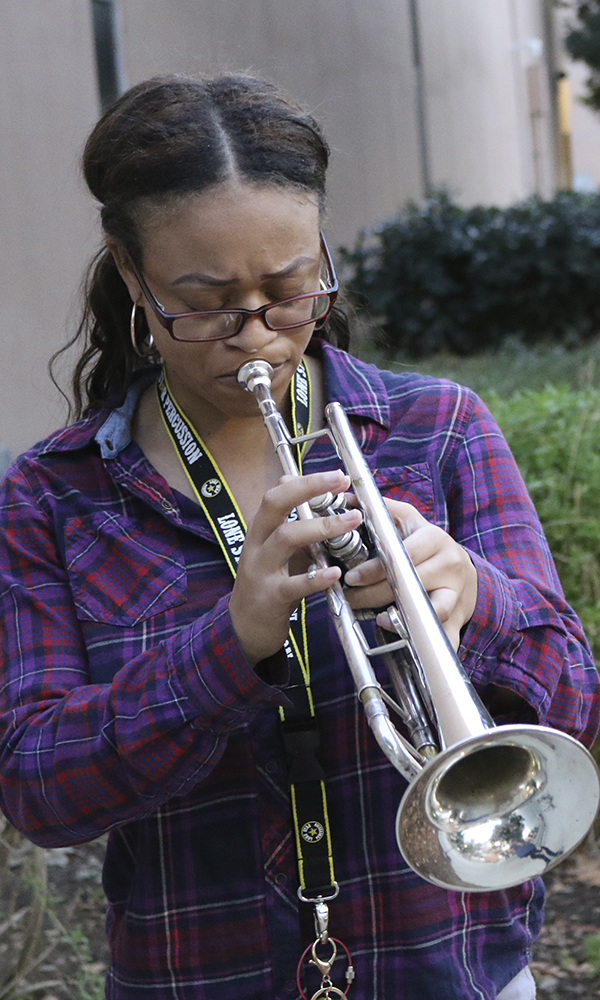
Trumepter performing outside.

right col
 
left col

Keyboard and Piano

Contacts
Piano and Organ Division Coordinator:  Alison Edwards
Graduate Program Advisor: Dr. John Koegel

right col
 
 
left col

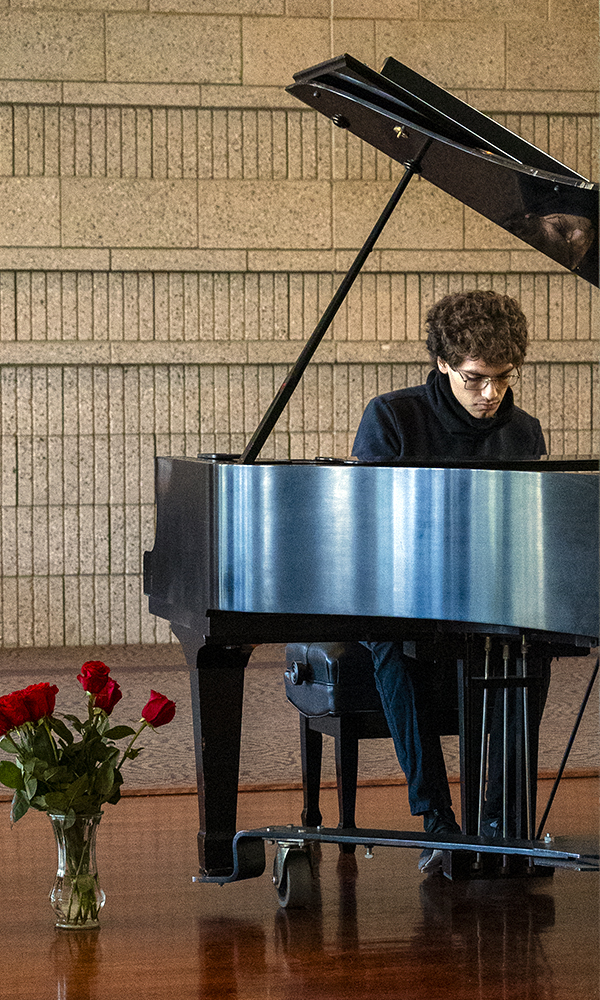
Pianist performing.

About the Program

All members of the keyboard faculty are active as performers, teachers and scholars, and are committed to excellence and helping our students

Beyond Studio and Classroom

  • Our faculty members: perform internationally, nationally and locally; lead national, regional and local workshops and conferences;invite renowned artists and teachers to appear on campus.
  • Our students: reach out to Southern California with "Pianists in Performance"; perform internationally as soloists and as piano ensemble teams; come from the USA and over 15 foreign countries.
  • Our alumni: raise the level of teaching throughout Southern California; lead in music teacher organizations; are professional accompanists and organists; perform as soloists and collaborative artists around the world.

Undergraduate: Piano

Repertoire and Other Audition Information for the BM and BA in Music Keyboard

Repertoire requirements

Piano:

Prospective pianists (whether entering as freshmen or junior transfer students) should select a work from each category that best displays their level of mastery.

  1. a Prelude and Fugue from the Well-Tempered Clavier by J.S. Bach
  2. a fast movement from a classic era sonata (e.g., Haydn, Mozart, Beethoven)
  3. any work from 19th-century Romanticism or the 20th or 21st centuries
    All works are to be played from memory.
    A brief sight playing example will also be provided for you to play.

Undergraduate: Organ

Repertoire and Other Audition Information for the BM and BA in Music Keyboard

Repertoire requirements

Organists:

Prospective organists should have studied the piano and had experience with a variety of styles including Baroque, Classic and Romantic piano literature.

Freshmen

  1.  a Prelude and Fugue by J. S. Bach from the “Little Eight” (BWV 553- 560)
  2. a movement from a Mendelssohn Organ Sonata, or equivalent
  3. a 20th- or 21st-century work (hymn-improvisations, e.g., Burkhardt, Manz, acceptable)
  4. any traditional hymn— demonstrating use of pedal on bass-line
    A brief sight playing example will also be provided for you to play.Note: If you have no formal organ training, prepare the repertoire for pianists (memorization optional). Indicate organ as your instrument in the emphasis box of the csumentor application and when signing up for your audition online.

Junior Transfer Students

  1. a more difficult Bach Prelude and Fugue, such as Fugue in G Minor (BWV 578)
  2. a fast or moderato movement from a Mendelssohn Sonata, or equivalent
  3. a contrasting 20th- or 21st- century work (may be toccata or scherzo style)
  4. a traditional hymn—2 verses with introduction and 2nd verse as a hymn improvisation for congregational singing
    A brief sight playing example will also be provided for you to play.

Master of Arts in Music: Piano Pedagogy

AUDITION REQUIREMENTS

  1. A thirty-minute DVD video and a written lesson plan of one or more of the following, as determined by your area of interest and specialization, and your experience:

    a. Individual piano lesson
    b. Partner piano lesson
    c. Small group piano lesson
    d. Electronic laboratory piano class
    e. Other (please specify)


    The written lesson plan must include a listing of all materials (including page numbers) being used in the video teaching demonstration as well as some brief but descriptive teaching reminders, goals. Copies of the materials being taught are recommended.

    For CSUF graduates who have completed MUS 477, the course instructor may verify that the satisfactory practice teaching requirement has been met.

  2. A fifteen-minute solo piano audition. The audition repertoire should be equivalent in terms of difficulty to that of a junior recital for the Bachelor of Music degree, or a senior recital for a Bachelor of Arts in Music degree. A diversity of styles is expected and should include a work from the Baroque era, one from the Classical era, and one from either the 19th or 20th -21st centuries.
  3. Live auditions are preferred, although a high quality DVD recording for the audition is acceptable. (CSUF graduates may request their Senior Recital to serve as the entrance audition.)

    Examples of repertoire for level include:

    J S Bach, Prelude and Fugue in E Major, WTC I
    J S Bach, Partita No. 1 in B flat Major
    Mozart, Sonata in A Major, K. 331
    Schubert, Sonata in A Minor, D. 784
    Schubert, Impromputs
    Schumann,  Papillons, Op. 2
    Brahms, Rhapsody in G Minor, Op. 79, No. 2
    Bartok, Suite, Op. 14
    Prokofieff,  Visions fugitives, Op. 22

  4. Sight Playing: The student may be asked to sight play music of moderate difficulty.

REQUIRED ESSAY AND OTHER WRITTEN MATERIALS

Please provide the teaching audition tape and the following written material at least two weeks  before the solo piano audition:

1. In an essay of ca. 500 – 750 words, choose one of the following topics to write on.

a. Discuss the main advantages and disadvantages of one of the following approaches to teaching music reading at the beginning level and list the primary proponents of the approach you choose to discuss.

An intervallic reading approach
A multi-key reading approach
A combination of intervallic and multi-key reading

b.   Discuss the main differences between an intervallic versus a multi-key approach to teaching music reading at the beginning level.  Give three examples of methodology used in each approach.

c. Choose one piece from the following intermediate repertoire collections and discuss the piece in terms of what you, the teacher must know about this piece in order to successfully teach it. Some examples of items you should know are form, style and technical demands. Also discuss how much of this piece you will assign to an average student at the first lesson and how you will tell this student to practice this piece the first week. Attach a copy of the music to the essay. Marks in the music are encouraged.

J.S. Bach: Little Preludes and Fughettas, BWV 939, 927, 924; choose a Prelude or a Fughetta
Friedrich Kuhlau: One First Movement from Sonatinas, Op. 55, nos. 1, 2, 3; Op. 88, no. 3
Robert Schumann: One piece from Kinderszenen (Scenes from Childhood), Op. 15
Bela Bartok: No. 1, 2, 3 or 4 from Rumanian Folk Dances
Dmitri Kabalevsky, One Rondo from Four Rondos, Op. 60
Robert Starer: One piece from Sketches in Color, Vol. I

d. Name three contemporary educational piano composers who often write in the romantic style; discuss their compositional styles by including titles and descriptions of at least three of their works; describe how their writing has helped to fill the void of accessible music in the romantic style for late elementary and early intermediate piano students.  You only need to attach one work by each composer.

2.  Provide a list of all piano repertoire studied to date.

3. Write a statement of purpose that includes your background in teaching, describes your reasons for pursuing a graduate degree in piano pedagogy and your professional goals in teaching and performing.

LETTERS OF RECOMMENDATION
Arrange to have letters of recommendation from three music professionals familiar with your preparation for graduate study sent to the School of Music graduate program adviser.

Master of Music in Performance: Piano 

The Master of Music in Performance is an applied-based degree requiring 30 units of study in private lessons, ensembles, chamber music, music history and literature, and music theory. The Cal State Fullerton School of Music faculty includes nationally and internationally recognized performers, scholars and composers. Students thrive in an environment that sustains challenging, vital music-making, with due regard for specialized individual attention. For those intending to pursue doctoral studies, the Master of Music degree normally leads to the DMA.

AUDITION REQUIREMENTS

Entrance Auditions as well as Scholarship Auditions for the Master of Music in Performance degree are normally held in February (for Fall semester entrance). Entrance Auditions also may be scheduled each semester (Fall and Spring) at a time and location agreeable to the applicant and the audition committee, but no later than the week just prior to the start of the semester. Under certain circumstances, a video audition may be used for preliminary assessments of ability; however, a live audition is always required.

The applicant should be prepared to perform from memory at least 30 minutes of music to include works from three different stylistic periods. One of these works must include at least one movement that is contrapuntal; there must also be at least one work of high virtuosity. In the case of a multi-movement work, the complete work should be prepared.

A comprehensive repertoire list of works that the applicant has studied and performed, arranged chronologically by composer’s birth year, should be provided at the time of the audition. This list should include both solo works and concertos.

Letters of Recommendation
Arrange to have letters of recommendation from three music professionals familiar with your preparation for graduate study sent to the School of Music graduate program adviser.

Master of Music in Performance: Collaborative Piano

The Master of Music in Performance is an applied-based degree requiring 30 units of study in private lessons, ensembles, chamber music, music history and literature, and music theory. The Cal State Fullerton School of Music faculty includes nationally and internationally recognized performers, scholars and composers. Students thrive in an environment that sustains challenging, vital music- making, with due regard for specialized individual attention. For those intending to pursue doctoral studies, the Master of Music degree normally leads to the DMA.

AUDITION REQUIREMENTS

Entrance Auditions as well as Scholarship Auditions for the Master of Music in Performance degree are normally held in February (for Fall semester entrance). Entrance Auditions also may be scheduled each semester (Fall and Spring) at a time agreeable to the applicant and the audition committee, but no later than the week just prior to the start of the semester (please contact Keyboard Area Coordinator, Dr. Rob Watson to schedule it). Under certain circumstances, a video audition may be used for preliminary assessments of ability; however, a live audition is always required.

The applicant should be prepared to perform from memory a major work for solo piano (e.g., a sonata) demonstrating both technical and musical command of the keyboard. As well, two contrasting works for instrument and piano, and two contrasting art songs should be performed. For collaborative works, the applicant is expected to provide the instrumentalist and the singer for the audition. If your residence is beyond the greater southern California region, it may be possible for the School of Music to supply a soloist from the students of CSUF.

The following examples are offered to suggest the level of difficulty of the collaborative portion of the audition repertory:

Examples of Instrumental works
Brahms: Clarinet Sonata in F minor, first movement Franck: Violin Sonata in A, second movement Schumann: Fantasy Pieces For Clarinet and Piano 

Examples of Art songs 
Schumann: Wehmut, op 39 Schubert: Liebesbotschaft Debussy: Green
Barber: The Daisies Strauss: Nichts!

Sight-playing and foreign language diction may also be examined as part of the audition.

A comprehensive repertoire list of works that the applicant has studied and performed, arranged chronologically by composer’s birth year, including works for solo piano, instrument(s) and piano, voice and piano, and operatic material.

Letters of Recommendation
Arrange to have letters of recommendation from three music professionals familiar with your preparation for graduate study sent to the School of Music graduate program adviser.

Master of Music in Performance: Organ

The Master of Music in Performance is an applied-based degree requiring 30 units of study in private lessons, ensembles, chamber music, music history and literature, and music theory. Organ students benefit from specialized instruction in topics such as organ history and repertoire. The Cal State Fullerton School of Music faculty includes nationally and internationally recognized performers, scholars and composers. Students thrive in an environment that sustains challenging, vital music-making, with due regard for specialized individual attention. For those intending to pursue doctoral studies, the Master of Music degree normally leads to the DMA.

AUDITION REQUIREMENTS

Entrance Auditions as well as Scholarship Auditions for the Master of Music in Performance degree are normally held in February (for Fall semester entrance). Entrance Auditions also may be scheduled each semester (Fall and Spring) at a time and location agreeable to the applicant and the audition committee, but no later than the week just prior to the start of the semester.  Under certain circumstances, a video audition may be used for preliminary assessments of ability; however, a live audition is always required.

The applicant should be prepared to perform at least 30 minutes of music to include works from three different stylistic periods. One of these works must include at least one movement that is contrapuntal; there must also be at least one work of high virtuosity. In the case of a multi-movement work, the complete work should be prepared.

A repertoire list of works that the applicant has studied and performed, arranged chronologically by composer’s birth year, should be provided at the time of the audition.

Letters of Recommendation
Arrange to have letters of recommendation from three music professionals familiar with your preparation for graduate study sent to the School of Music graduate program adviser.

Artist Diploma: Piano

Solo pianists auditioning for this program should prepare:

  1. A substantial contrapuntal work from any stylistic era
  2. A complete classic era piano sonata or independent set of variations
  3. A large romantic era work (examples, Liszt Dante Sonata, Brahms Handel Variations, Schumann Kreisleriana, Moussorgsky Pictures at an Exhibition) or a collection of works by a single composer (examples, a complete Opus of Brahms, or a Polonaise, Nocturne, Maurka, and a Ballade by Chopin, or a Hungarian Rhapsody, a Transcendental Etude, and a Petrarch Sonetto by Liszt)
  4. A work from the 20th or 21st centuries
    (NOTE: if the contrapuntal work offered in no. 1 above would otherwise fit into this category, then a Baroque work should be presented)
  • At least one work should demonstrate a level of high virtuosity.
  • All works are to be performed from memory.
  • A “Repertoire List” of all works that the candidate has studied or performed, including concerti, should be submitted prior to the audition.
right col
 
left col

Vocal, Choral and Opera

Contacts
Vocal Area Coordinator: Dr. Joni Prado
Graduate Program Advisor: Dr. John Koegel

right col
 
 
left col

About the program

The vocal, choral, and opera programs at CSUF offer a variety of opportunities for singers and conductors at both the undergraduate (bachelor’s) and graduate (master’s) levels.

Students receive a specialized yet comprehensive education while preparing for careers as performers, teachers and conductors. Classical Singer Magazine has recognized the Opera Theatre and vocal programs for excellence in training young singers for professional operatic careers.

Undergraduate Voice

Prescreening Requirements

  1. All undergraduate vocal applicants must record two selections aligning with the repertoire required for the live audition. Please be sure to include at least one foreign language selection.

Audition Repertoire Requirements

  1. Please prepare: 2 contrasting pieces (1 classical art song/aria preferably in a foreign language - Italian, Spanish, German, French; 1 other song - can be an art song/aria or legit Musical Theatre from the Golden Age - no belting)
    1. The 2 audition songs combined, should not exceed 7 minutes total. If they run longer, singers may be stopped in order to allow enough time for the musicianship portion of the audition. If granted a live audition, singers can choose to present the same songs as in the prescreen, or present new material as long as the total time does not exceed the 7 minute maximum.
  2. Basic musicianship skills are expected from all successful applicants for the music major. Be prepared for a short sight- singing examination of basic rhythmic patterns and diatonic melody, similar in difficulty to these examples: 

  3. Arrange for someone familiar with your musical and academic ability to email a letter of recommendation in PDF or Word format directly to   Dr. Joni Prado . No special form is required for this letter.

Graduate Voice

Prerequisites

The entering graduate student will have completed an undergraduate music degree with voice as the primary instrument. Prior solo recital experience is expected but not required; a “senior recital,” as well as a “junior recital” program from the applicant’s undergraduate study should be documented by a recording and program.

Applicants must have completed undergraduate level language courses in at least two of three target languages (Italian, German, French), as well as the equivalent of three semesters of diction for singers (English, Italian, German, French). Opportunity is given to make up deficiencies but such courses cannot be applied to the Master’s degree.

Prescreening Requirements

  1. Please submit samples of the repertoire required for the live auditions. Selections should reflect a variety of languages, styles and eras. Please see the live audition requirements for specific details.

Audition Repertoire Requirements

  1. Basic musicianship skills are expected from all successful applicants for the music major. Be prepared for a short sight- singing examination of basic rhythmic patterns and diatonic melody, similar in difficulty to these examples: 

  2. Arrange for someone familiar with your musical and academic ability to email a letter of recommendation in PDF or Word format directly to  Dr. Joni Prado . No special form is required for this letter.

Artist Diploma Voice

Applicants must prepare all MM requirements in addition to two opera arias and one oratorio aria.

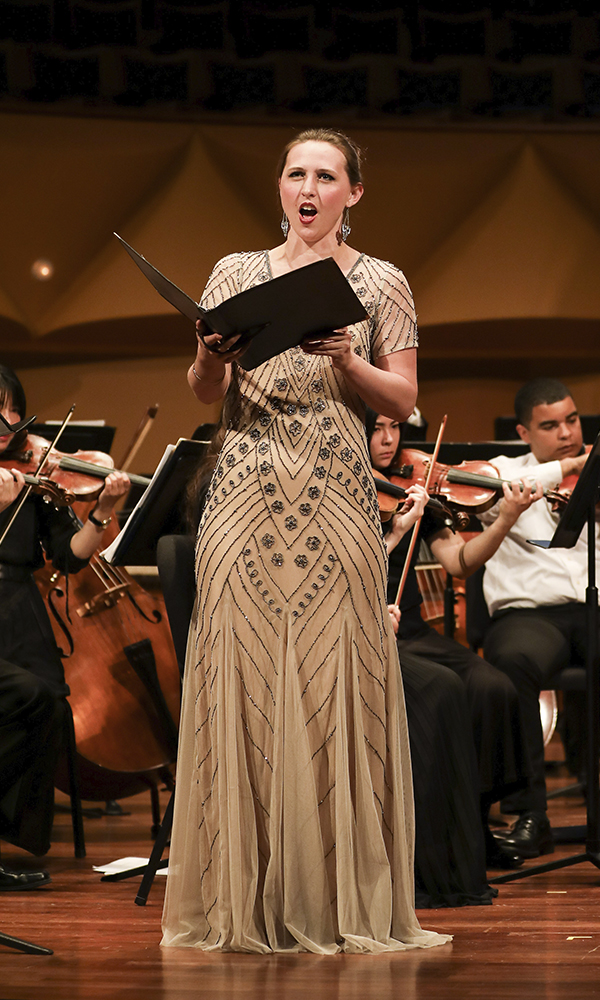
Soloist singing in front of the orchestra..

right col
 
left col

Conducting (Choral and Wind Band)

Contacts
Director of Choral Studies: Dr. Robert Istad
Director of Wind Band Studies: Dr. Dustin Barr
Graduate Program Advisor: Dr. John Koegel

right col
 
 
left col

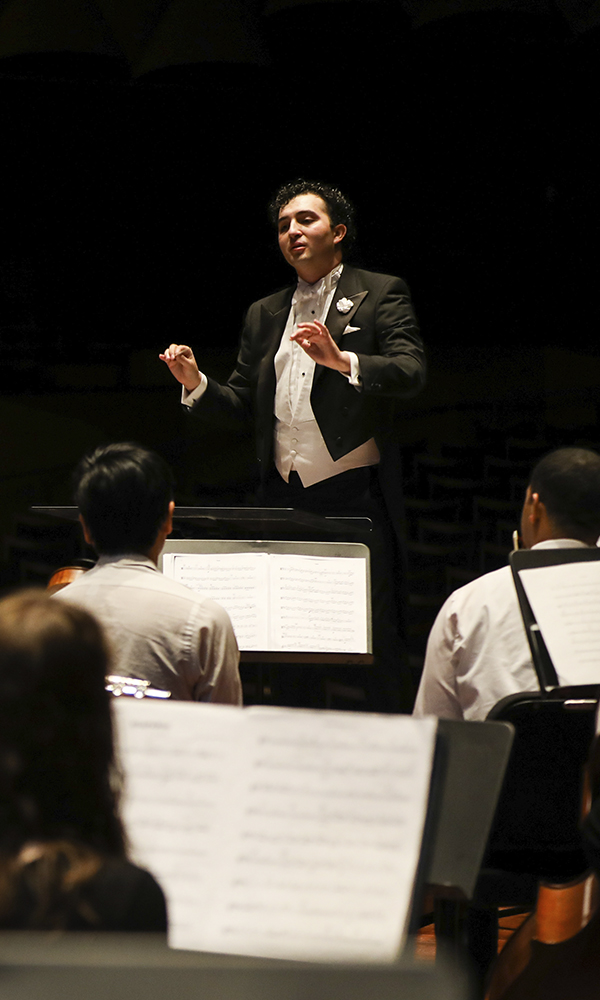
Conductor at the podium.

About the program

The School of Music offers the Master of Music degree in performance with an emphasis in choral conducting, wind conducting, or orchestral conducting.

All degree plans offer a comprehensive study plan that includes specialized courses in repertoire, history, score study and individual conducting lessons. Many graduates of the Master of Music degree in conducting have gone on to fulltime positions at community colleges throughout the United States and on to doctoral programs at some of the finest music schools in America.

Master of Music in Performance: Choral Conducting

Pre-Screening Audition/Essay Requirements

Applicant must submit a video of a recent rehearsal. Please limit time to 10-20 of unedited material.

Before audition, the applicant shall submit a writing sample (essay or previously written academic paper) of 500-750 words on one of the following topics:

a)  Problems in the selection of editions of early choral music.
b)  An aspect of musical style, performance practice, or interpretation of the audition piece.
c)  A body of literature by a particular composer, and its significance.
d)  The conductor’s preparation for rehearsal and performance.
e)  A significant aspect of choral pedagogy.

Audition Requirements (following pre-screening material submission)

    • The Director of Choral Studies will determine each candidate’s audition date and time in coordination with the prospective student.
    • An audition committee of three faculty members will be assembled, and will include Dr. Robert Istad, Dr. Christopher Peterson, a member of the instrumental conducting faculty, and the Director of Graduate Studies.
    • Audition will consist of the following items:

Candidate will have a short interview with Dr. Robert Istad and Dr. Christopher Peterson. Candidate will be allowed 15 minutes to conduct the CSUF University Singers in the following: 

Academic Preparation and Practical Experience

7 Minutes: An excerpt from the standard unaccompanied choral repertoire will be performance ready by the choir and is intended to determine the level of the candidate’s conducting technique.  The Assigned Pieces are:
     1. Josef Rheinberger, from  Cantus Missae in E-flat, Op. 109:
         a. III. Credo
     2. Daniel Knaggs,  O Praise the Lord (Psalm 117)

8 Minutes: Candidate will select and briefly rehearse a selection of their 
choice. (If the selection is not owned by CSUF, candidate will supply 40 copies at the time of the audition.)

Candidate will prepare:

    • One solo art song or aria that displays the best of his or her vocal ability.
    • One solo work for piano that showcases the best of his or her keyboard ability.
    • Candidate will be asked to read at sight:
      • Tonal and Rhythmic exercises vocally
      • One four-part, open choral score
      • One simple piano accompaniment

A student will be admitted to the M.M. program in choral conducting only if his or her academic preparation and experience are sufficient. A student whose undergraduate major or concentration was not choral conducting may be required to take remedial coursework before auditioning. In general, at least one full year of experience as a public-school choral music teacher or two years experience directing an adult church choir are prerequisite to admission.Students not accepted into the program after the first audition may re–audition once in a future semester.

Master of Music in Performance: Wind Band Conducting

Audition Requirements and Other Essentials

Pre-Screening Audition

The following must be submitted on or before January 15 for consideration for admission the following Fall.

A video of a recent performance (10-minute maximum) and a recent rehearsal (20-minute maximum). The videos should be filmed from the ensemble’s perspective, showing a front-side view of the conductor. The videos may be cropped to fit within the time limitations, but should be otherwise unedited. Applicants may submit links to online videos or submit a DVD.

Audition Requirements (Following pre-screening material submission above)

The Director of Wind Studies will determine each candidate’s audition date and time in coordination with the prospective student. Audition dates will usually occur on a Monday or Wednesday in the months of February or March.

Prior to the audition date, the applicant will submit a 1000-1500 word analysis of a major work from the band or chamber winds repertoire. The Director of Wind Studies will discuss appropriate repertoire selections with each individual invited to a live audition.

Candidate will complete the following at their live audition:

An interview with Dr. Dustin Barr (not to exceed one hour in length)

A 15-25 minute conducting session with either the University Wind Symphony or the Symphonic Winds. Repertoire to be conducted will be discussed in consultation with Dr. Barr at least one month prior to the audition date.

A brief informational meeting with Dr. John Koegel, Director of Graduate Studies in the School of Music (pending Dr. Koegel’s availability)


Academic Preparation and Practical Experience

A student will be admitted to the M.M. program in wind conducting only if his or her academic preparation and experience are sufficient. Remedial coursework may be required as deemed necessary. In general, at least one full year of conducting experience (public/private school teaching, community bands, conducted chamber ensembles, etc.) is a prerequisite for admission.

    • Students not accepted into the program after the first audition may re-audition once in a future semester.
    • Questions about this degree program should be directed to Dr. Dustin Barr.

Letters of Recommendation: Arrange to have letters of recommendation from three music professionals familiar with your preparation for graduate study sent to the School of Music graduate program adviser.

Entrance Exams: After being admitted, all entering graduate students take entrance exams in music history and music theory. The exams cover undergraduate level material and are given Thursday before the first week of classes.

right col
 
left col

Composition Auditions

Contacts
Composition Area Coordinator: Dr. Ken Walicki
Graduate Program Advisor:  Dr. John Koegel 

right col
 
 
left col

About the Program

The Composition and Music Theory area at California State University, Fullerton supports students in developing individual creative voices, strong musicianship, and the practical skills needed to make music in today’s diverse artistic world.

Students work closely with faculty whose creative, scholarly, and pedagogical backgrounds reflect a wide range of musical practices and professional experience. Through private composition lessons, coursework, and collaboration with performers, students compose for a variety of media, including acoustic instruments and voices, electronic and computer-based music, interdisciplinary projects, film and visual media, and other emerging creative forms.

Composition students at CSUF are part of an open and active creative community with many opportunities to hear their music performed, work with student performers and ensembles, and develop professional recordings of their compositions. The Composers Forum concert series, New Music Ensemble, and CSUF’s New Music Festival connect students with renowned guest composers, performers, and ensembles through concerts, presentations, workshops, and direct engagement. Graduates of the program have continued their studies in high-quality graduate and doctoral programs and have pursued creative, scholarly, educational, and professional work in music.

Bachelor of Music in Composition

The program allows students to choose between two tracks: 1) Composer-Performer track (recommended) and 2) Composition track.

The Composer-Performer track allows students to split their individual lessons for two or four semesters between composition and instrumental/vocal studies in either the Classical or Jazz area. Students must complete a separate audition for their instrumental/vocal area. We recommend this track for students who sing or play an instrument taught in the School of Music, particularly those with prior performance experience. Students pursuing the Composer-Performer track will enroll in a Classical or Jazz Major Performance Ensemble in each semester they split lessons.

The Composition track allows students to enter the composition program with any instrument, including world instruments, or with computer-based performance. Students must demonstrate strong performance skills on an instrument or computer-based setup of their choice as part of their portfolio submission. Students in composition track will take applied lessons only in Composition.

Composition Portfolios:

  • List of Works: A list of works presented in your composition portfolio. For each composition, please list the title and instrumentation, as well as the performers, if applicable. You may also include a brief description of each work. For the performance recording, please list the title of the work and the composer.
  • Scores of original compositions: Freshman applicants should submit 1–2 original works, and transfer applicants should submit 2–3 original works. The works should represent different styles and combinations of instruments and/or voices. At least one work should be accompanied by a recording. A live recording is preferred, but MIDI is also acceptable.
  • Performance Recording: One video recording, no more than five minutes in length, of solo repertoire for your instrument. You may perform with an accompanist, but ensemble performances should not be included.
  • Artist Statement: A Statement of Interest of no more than 500 words in which you describe your musical experience and your musical, educational, and career goals.

Interview: Applicants who pass the portfolio screening will be invited to a virtual interview with a member of the composition faculty.


Portfolio Submission Applications will be emailed to you.

Submission periods:

  • Opens: early December
  • Closes: January 10, 2027 (11:59 p.m.)

Master of Music in Music Theory-Composition

Prospective students interested in the Master of Music in Music Theory-Composition program are required to submit a portfolio demonstrating their background and experience in music composition and performance.

Composition Portfolios:

 
  • List of Works: A complete list of works, including those submitted as part of your composition portfolio. For each composition, please include the title and instrumentation, as well as the performers, if applicable. You may also include a brief description of each work. For the performance recording, please include the title of the work and the composer.
  • Scores of original compositions: Three scores of original compositions. The works should represent a variety of styles and combinations of instruments and/or voices. At least one work should be written for an ensemble of four or more performers, and at least one should use traditional musical notation. Sound recordings of all three submitted works are required. Electronic or MIDI realizations are acceptable, but recordings by live musicians are preferred.
  • Performance Recording: One video recording, no more than five minutes in length, of solo repertoire performed on your instrument. You may perform with an accompanist, but ensemble performances should not be included.
  • Artist Statement: An artist statement of no more than 500 words describing your musical experience; your musical, educational, and career goals; and your compositional philosophy.

Interview: Applicants who pass the portfolio screening will be invited to a virtual interview with a member of the composition faculty.


Portfolio Submission Applications will be emailed to you.

Submission periods:

  • Opens: early December
  • Closes: January 10, 2027 (11:59 p.m.)

Students in a classroom.

right col
 
left col
right col
 
left col
right col
 
 
left col
right col
 
left col
right col
 
left col
right col
 
left col
right col
 
left col
right col
 
left col
right col
 
left col
right col